
How Often to Clean Appliances: The Complete Home Maintenance Schedule

If you’ve ever wondered how often to clean appliances, you’re not alone. While most people stay on top of everyday chores like vacuuming, dusting, and washing dishes, many household appliances don’t get the attention they need until they stop working properly or develop an unpleasant odor.
The truth is that a little routine maintenance can go a long way toward helping your appliances run more efficiently, last longer, and avoid unnecessary repairs.
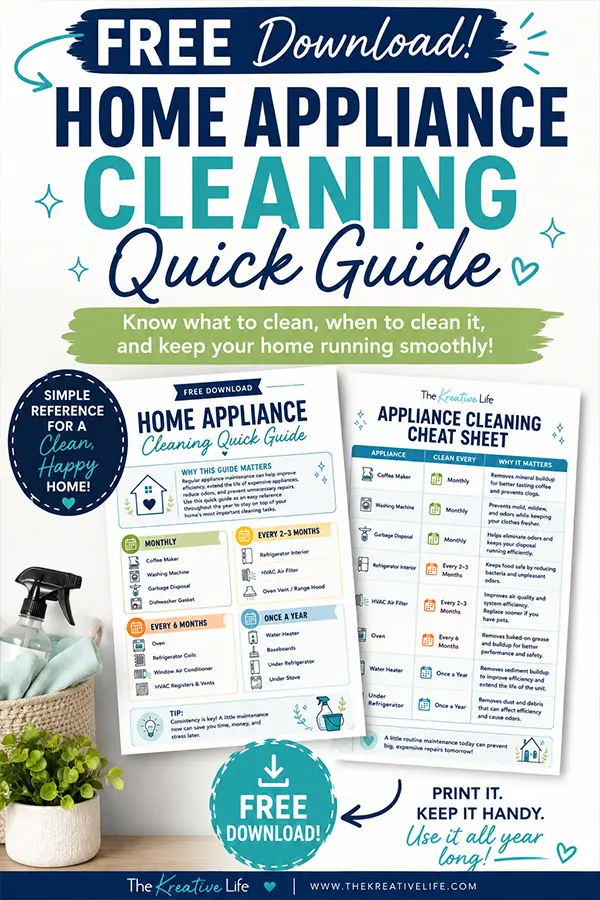
Unfortunately, it can be difficult to remember which appliances need monthly attention and which only need to be cleaned once or twice a year. That’s why I recommend keeping an appliance cleaning schedule. If you’d rather not rely on memory, be sure to download my free Appliance Cleaning Schedule Printable below.
It’s an easy way to record when you last cleaned each appliance and know exactly when it’s time to do it again.
Whether you’re trying to extend the life of your appliances, improve your home’s efficiency, or simply stay on top of household chores, this guide will help you understand how often to clean appliances throughout your home and why each task deserves a spot on your maintenance checklist.
The Complete Home Maintenance Schedule
When to Clean Kitchen Appliances
The kitchen contains some of the hardest-working appliances in your home. From brewing your morning coffee to cooking dinner and storing fresh food, these appliances are used every day.
Regular cleaning not only helps them perform their best but also improves food safety, reduces odors, and can even lower energy costs.
How often should you clean your coffee maker?
Few appliances get used as consistently as a coffee maker. Every pot of coffee leaves behind natural oils while minerals from your water slowly build up inside the machine. Over time, these deposits can affect the flavor of your coffee and force the coffee maker to work harder than necessary.
How frequently you brew coffee and the type of water you use both play a role in how quickly buildup develops. Even if your coffee still tastes fine, mineral deposits may already be reducing the machine’s efficiency.
For most households, a coffee maker should be deep cleaned once a month.
Run a descaling solution or a mixture recommended by your manufacturer through the machine, then wash removable parts with warm, soapy water. Regular cleaning keeps every cup tasting fresh while helping your coffee maker last longer.
How often should you clean your garbage disposal?
Your garbage disposal makes quick work of food scraps, but tiny bits of food and grease can cling to the grinding chamber and splash guard. As they break down, they often become the source of unpleasant kitchen odors.
The amount of use your disposal gets can make a big difference. A busy household that cooks every day will usually need to clean it more often than someone who rarely uses it.
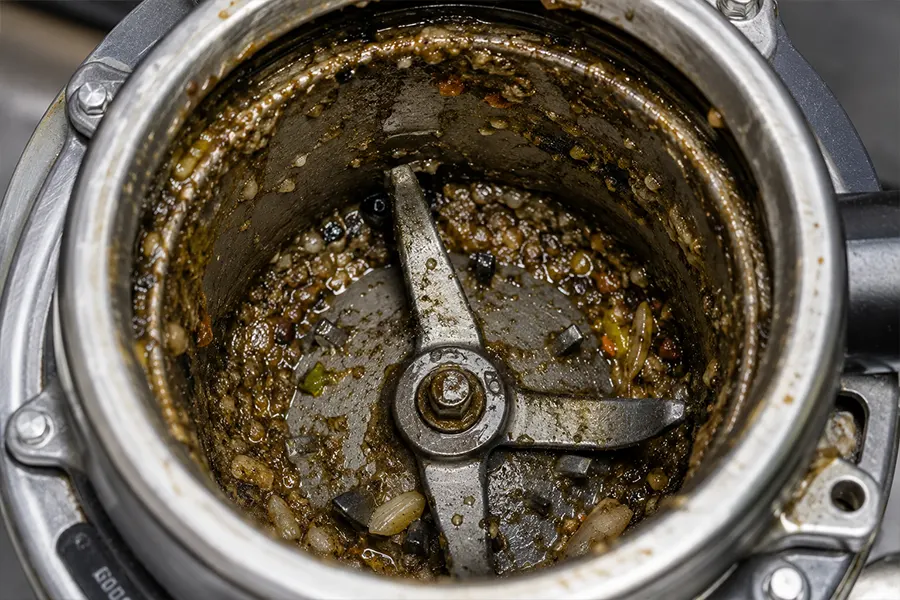
A garbage disposal should be cleaned about once a month.
Grinding ice cubes can help remove light buildup, while baking soda and vinegar can freshen the disposal naturally. Don’t forget to scrub underneath the rubber splash guard, since this is where odor-causing bacteria often hide.
How often should you clean your dishwasher gasket?
The rubber gasket around your dishwasher door creates a watertight seal every time you run a cycle. Because it stays damp for long periods, it’s also one of the easiest places for mold, mildew, and food residue to collect without being noticed.
Most homeowners don’t inspect the gasket until they notice black spots or an unpleasant smell. By then, residue has usually been building up for weeks or even months.
Wipe down the dishwasher gasket once a month.
A soft cloth with warm, soapy water is usually all you need. While you’re cleaning it, check for cracks or tears that could eventually lead to leaks.
How often should you clean the inside of your refrigerator?
Your refrigerator protects your family’s food every day, but spills, crumbs, and forgotten leftovers can quickly create odors and provide a place for bacteria to grow. Cleaning the shelves regularly also helps you notice expired foods before they take up valuable space.
Some messes should be cleaned immediately, but even an organized refrigerator benefits from routine deep cleaning. Removing everything from the shelves makes it easier to reach hidden spills and wipe down every surface.
Plan to deep clean the refrigerator interior every two to three months.
Take the opportunity to throw away expired food, wipe shelves and drawers, and clean the door compartments. It’s much easier to keep the refrigerator fresh with regular maintenance than to tackle months of accumulated mess all at once.
How often do refrigerator coils need cleaning?
Most people never think about the coils underneath or behind their refrigerator, yet they’re responsible for releasing heat that keeps the appliance cool. When dust and pet hair cover the coils, the refrigerator has to work harder to maintain the proper temperature.
If you have pets, you’ll probably notice dust collecting much faster than households without them. Even in a relatively clean home, the coils gradually become coated with lint and debris.
Clean your refrigerator coils every six months.
A refrigerator coil brush or a vacuum with a brush attachment works well for removing buildup. This simple maintenance task can improve energy efficiency and may even help extend the life of your refrigerator’s compressor.
Trying to remember tasks that only happen twice a year isn’t easy. That’s exactly why I created the free Appliance Cleaning Schedule. Recording the date after each cleaning makes it much easier to stay on schedule.
How often should you clean your oven?
Even careful cooks eventually end up with baked-on grease, food splatters, and smoke-producing spills inside the oven. Besides creating unpleasant odors, excessive buildup can affect cooking performance and make cleaning much more difficult later.
The answer depends on how often you cook and what types of meals you prepare. Frequent baking and roasting usually lead to faster grease buildup than occasional use.
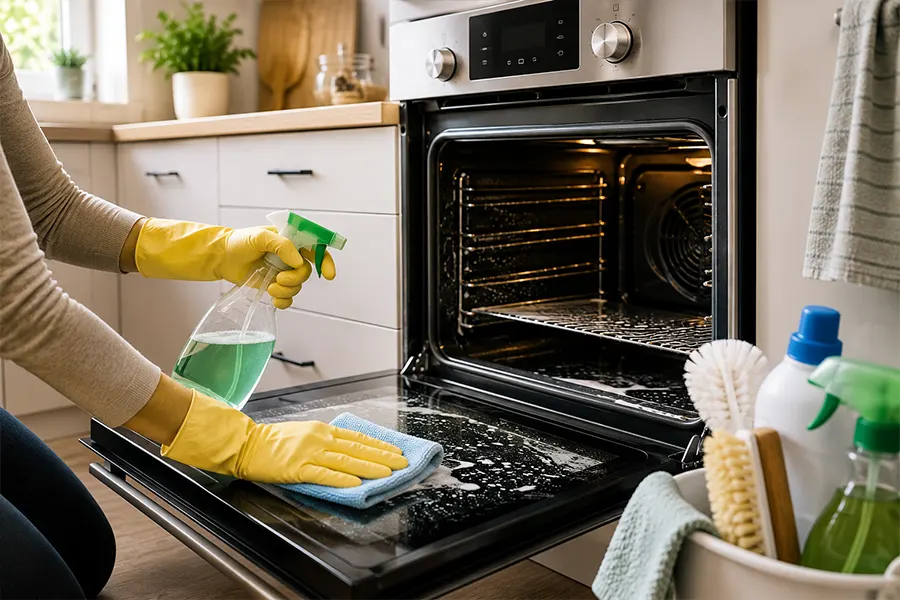
For most homes, the oven should be deep cleaned every six months.
Don’t wait until smoke fills the kitchen before giving it attention. Wiping up fresh spills after they’ve cooled and scheduling regular deep cleanings will keep the job much more manageable.
How often should you clean your oven vent?
Your range hood pulls grease, smoke, and cooking odors away from your kitchen every time you use the stove. Over time, grease collects on the vent filters and surrounding surfaces, reducing how effectively the fan can do its job.
The more often you fry foods or cook on the stovetop, the faster grease will accumulate. Even homes that cook less frequently should include this task in their regular kitchen maintenance routine.
Clean your range hood filters and wipe down the vent every two to three months.
Many metal filters can be washed in warm, soapy water or placed in the dishwasher if the manufacturer recommends it. Keeping the vent clean helps improve airflow while reducing grease buildup throughout your kitchen.
When to Clean Appliances in Your Laundry Room
The laundry room is home to appliances that deal with dirt, moisture, lint, and detergent every day. While they’re designed to handle tough jobs, they still need regular maintenance to perform efficiently. A few simple cleaning tasks throughout the year can help your appliances last longer, reduce energy costs, and even improve your clothes’ cleanliness.
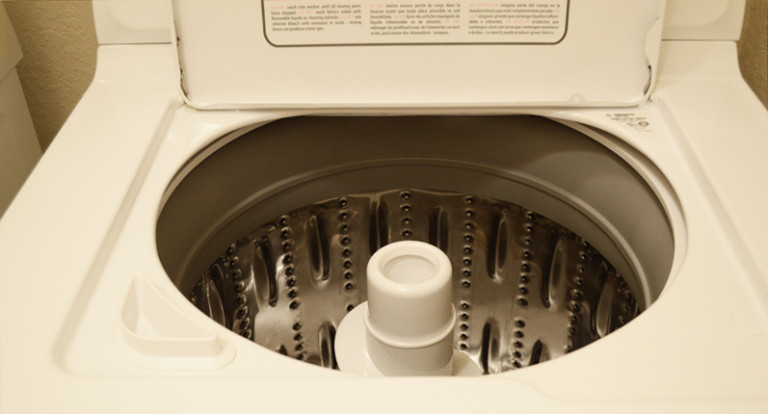
How often should you clean your washing machine?
Your washing machine works hard to remove dirt and stains from your clothes, but it also collects detergent residue, fabric softener, body oils, and minerals from your water. Over time, this buildup can lead to unpleasant odors, mold and mildew, and even reduce how effectively your machine cleans. Regular maintenance helps keep your washer running efficiently while extending its lifespan.
How frequently you do laundry and the types of loads you wash both affect how quickly residue builds up. Households that wash several loads each week will usually need to clean their machines more often than those with lighter use.
For most households, a washing machine should be deep cleaned once a month.
Run your washer’s cleaning cycle with a washing machine cleaner or an empty hot-water cycle using a manufacturer-approved cleaning product. Wipe down the rubber door gasket, detergent dispenser, and inside of the door, since these areas commonly trap moisture and detergent residue. If your washer has a removable filter, clean that according to your owner’s manual as well.
While you’re cleaning the machine, it’s also a good idea to pull it away from the wall once a year to vacuum underneath it and check the water supply hoses for leaks or signs of wear. Catching a small problem early can help prevent expensive water damage later.
How often should you clean your dryer vent?
Your dryer removes moisture from clothing, but it also produces lint with every load. While the lint trap catches most of it, small fibers still make their way into the dryer vent over time. As lint builds up, airflow becomes restricted, causing the dryer to work harder and increasing drying times.
The answer depends on how frequently your dryer is used and the types of fabrics you wash. Large families often accumulate lint much faster than smaller households.
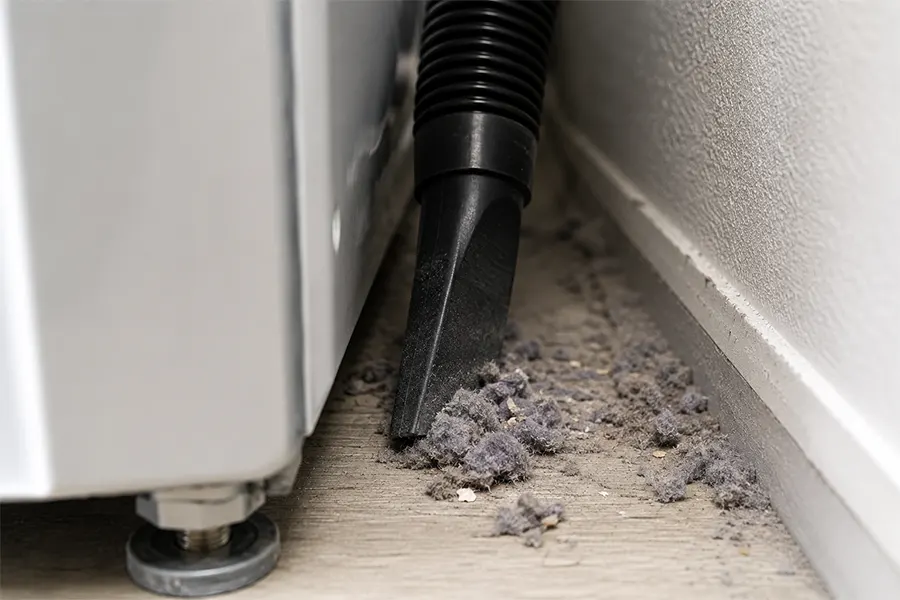
A dryer vent should be cleaned at least once a year, while the lint trap should be cleaned after every load.
If your clothes are taking longer to dry than usual or the outside of the dryer feels unusually hot, don’t wait for your annual cleaning. These can be signs that the vent is becoming clogged. Keeping the vent clean improves efficiency, lowers energy costs, and helps reduce the risk of dryer fires.
Some maintenance jobs only come around once a year, making them easy to forget. That’s why I include them on the free Appliance Cleaning Schedule Printable, so you always know what’s coming up next.
When to Clean Heating and Cooling Appliances
Your heating and cooling appliances quietly keep your home comfortable throughout the year, but they often receive the least attention. Dust, pollen, pet hair, and other airborne particles slowly collect inside filters and vents, forcing your system to work harder than necessary. Adding these appliances to your regular home maintenance routine can improve indoor air quality while helping reduce energy bills.
When is it time to replace your HVAC air filter?
Your HVAC air filter captures dust, pollen, pet dander, and other airborne particles before they circulate throughout your home. As the filter becomes clogged, your heating and cooling system has to work harder to push air through it, which can reduce efficiency and increase wear on the equipment.
The right schedule depends on several factors, including the type of filter you use, whether you have pets, and how much your heating or air conditioning runs throughout the year. Homes with multiple pets or allergy sufferers often need more frequent filter changes.
Most HVAC air filters should be replaced every two to three months.
Check your filter monthly, especially during the summer and winter when your system runs more often. If it looks dirty before the recommended replacement time, go ahead and install a new one. A clean filter is one of the easiest and most affordable ways to improve your HVAC system’s performance.
How often should you clean your air purifier?
An air purifier helps remove dust, allergens, smoke, and other particles from the air inside your home. However, it can only do its job effectively if the filters remain clean. As they become clogged, airflow decreases and the purifier becomes less efficient.
Every model is a little different, so it’s important to follow the manufacturer’s recommendations. Some units have washable pre-filters, while others use disposable HEPA filters that eventually need replacement.
Wash reusable pre-filters about once a month, and replace HEPA filters every six to twelve months, depending on the manufacturer’s instructions.
Taking just a few minutes to clean or replace the filters helps maintain better indoor air quality and allows your air purifier to operate as efficiently as possible.
How often should you clean a window air conditioner?
A window air conditioner works hard during the hottest months of the year, pulling warm air from your home while filtering out dust and debris. Over time, dirt builds up on the filter and coils, reducing airflow and making the unit work harder to cool your space.
Cleaning needs vary depending on how often the unit is used and whether it’s exposed to heavy pollen, dust, or nearby trees. Seasonal units should also be cleaned before being stored for the winter.
Clean the air filter once a month during the cooling season, and give the entire unit a thorough cleaning at least once a year.
Removing dust from the filter and gently cleaning the exterior coils can improve cooling performance and help reduce energy consumption. Before storing the unit for the season, make sure it’s completely dry to help prevent mold and mildew from developing while it’s not in use.
If you’re trying to remember when to replace filters or clean seasonal appliances, don’t leave it to chance. My free Appliance Cleaning Schedule Printable gives you one convenient place to track every maintenance task throughout the year, making it much easier to stay organized and keep your appliances running efficiently.
Whole-Home Maintenance Cleaning Appliances Guide
Not every important cleaning task is tied to a single room. Some of the most overlooked maintenance jobs involve areas that are out of sight, making them easy to forget for months or even years. Adding these tasks to your regular appliance cleaning schedule can help improve your home’s efficiency, prevent unnecessary wear, and reduce the chances of expensive repairs down the road.
How often should you flush your water heater?
Your water heater quietly supplies hot water every day, but minerals from your water settle inside the tank over time. This layer of sediment forces the unit to work harder, reduces its efficiency, and can eventually shorten its lifespan if it isn’t removed.
The ideal schedule depends on the hardness of your water and how much hot water your household uses. Homes with hard water tend to accumulate sediment much faster than those with softer water.
For most households, a water heater should be flushed once a year.
Flushing the tank removes sediment before it has a chance to build up, helping the unit heat water more efficiently. If you’ve never done it before, check your owner’s manual or consider hiring a professional to perform the service.
How often should you clean your baseboards?
Baseboards may not be appliances, but they’re often included in seasonal home maintenance because they quietly collect dust, pet hair, and scuff marks throughout the year. Since they’re below eye level, it’s easy to overlook them during regular cleaning.
The amount of dust in your home, whether you have pets, and how much foot traffic each room receives all affect how quickly your baseboards become dirty.
Plan to deep clean your baseboards every six months.
A microfiber cloth or vacuum brush attachment removes loose dust, while a damp cloth easily wipes away stubborn dirt and marks. Including this task in your routine instantly makes a room look cleaner with very little effort.
How often should you clean under your refrigerator?
It’s amazing how much dust, pet hair, and kitchen debris can collect underneath a refrigerator. Since this area is hidden from view, many homeowners don’t think to clean it until years have passed.
Homes with pets usually see buildup much faster because hair and dust are constantly pulled underneath the appliance. Even without pets, dirt gradually accumulates over time.
Pull the refrigerator out and clean underneath it once a year.
While you have the refrigerator moved, it’s also the perfect opportunity to clean the refrigerator coils if they haven’t been done recently. Combining these two tasks saves time and helps your refrigerator operate more efficiently.
How often should you clean under your stove?
Grease splatters, crumbs, and food spills have a way of finding their way beneath the stove. Left alone, they can create odors, attract pests, and become much harder to remove as they harden.
If you cook frequently, especially meals that involve frying or sauces, you’ll probably notice buildup sooner than someone who cooks only occasionally.
Move the stove and clean underneath it once a year.
While you’re there, wipe down the sides of the appliance and inspect the surrounding area for grease or food residue. It’s one of those jobs that doesn’t take long but makes a noticeable difference.
How often should you clean your HVAC vents and registers?
Your HVAC system pushes air through the vents in every room, and those vents naturally collect dust throughout the year. Dirty registers don’t just look bad. They can also reduce airflow and circulate dust back into your living spaces.
How quickly dust builds up depends on your home’s air quality, whether you have pets, and how often your heating or cooling system runs.
Clean your HVAC registers every six months.
Remove the vent covers, wash them with warm, soapy water, and vacuum just inside the duct opening to remove loose dust. While this isn’t a substitute for professional duct cleaning when it’s needed, regular maintenance helps keep dust under control.
Many of these yearly tasks are easy to forget because they happen so infrequently. That’s one reason I created the free Appliance Cleaning Schedule Printable. It gives you a simple place to record the date you completed each task, so you don’t have to rely on memory the following year.
Keep Your Home Maintenance Appliance Cleaning Schedule on Track
Learning how often to clean appliances is the first step toward protecting your home and avoiding preventable repairs. Most of these tasks only take a few minutes, but staying consistent can improve energy efficiency, reduce odors, extend the life of your appliances, and help your home run more smoothly.
If you’re just getting started, don’t feel like you have to tackle everything at once. Choose one or two maintenance tasks each month and build the habit over time. Before long, keeping up with your home will feel much more manageable.
To make things even easier, download my free Appliance Cleaning Schedule by clicking here. It’s designed to help you track when each appliance was last cleaned and when it’s due again, so nothing slips through the cracks.
A little preventive maintenance today can save you time, money, and frustration tomorrow. With a simple schedule and the right tools, you’ll always know how often to clean appliances and feel confident that your home is getting the care it deserves.