
How to Teach a Child First Aid

Most parents hope that their children will never have to respond to an emergency, but accidents happen every day. A scraped knee at the playground, a splinter after playing outside, or a bee sting during a family picnic can quickly turn an ordinary afternoon into a stressful situation.
Teaching children basic first aid does not mean expecting them to become medical experts. Instead, it means giving them the confidence and knowledge to stay calm, recognize when someone needs help, and know what steps to take until an adult arrives.
If you have ever wondered, “Should I teach my child first aid?” the answer is yes. Learning first aid is an important life skill that helps children become more responsible, prepared, and aware of their surroundings.
The good news is that teaching first aid does not have to feel like school. With a few simple activities and real life examples, parents can make first aid lessons both fun and memorable.
Should I Teach My Child First Aid?
Many parents worry that first aid is too advanced for children. In reality, kids start learning safety skills at a very young age. They learn to wear seat belts, look both ways before crossing the street, and avoid touching hot objects. First aid is simply another part of helping children understand how to stay safe.
Teaching a kid first aid does not mean placing them in charge during an emergency. Instead, it teaches them how to react appropriately, when to ask for help, and how to handle small injuries safely.
Children who understand basic first aid are often less likely to panic when something unexpected happens because they already know what to do.
The earlier children begin learning these skills, the more comfortable they become using them. Even simple lessons can make a big difference in helping kids feel prepared.
How to Teach a Child Basic First Aid at Home
Parents do not need medical training to teach basic first aid. In fact, many of the best lessons happen during everyday activities.
Start with the most important rule: children should always know when to get an adult. Explain that some injuries are small and manageable, while others require immediate help.
Teach your child that serious bleeding, difficulty breathing, burns, or someone losing consciousness are situations that require adult assistance right away.
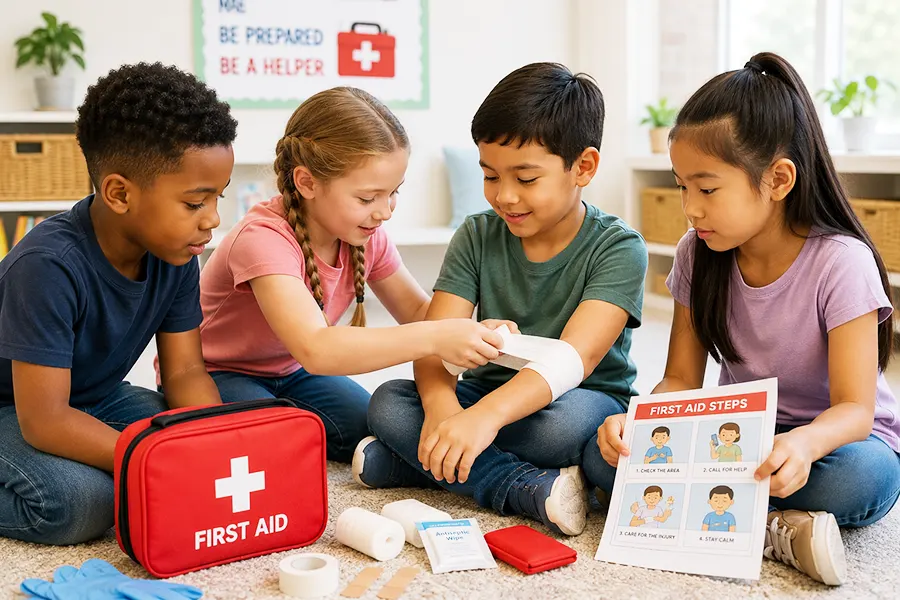
Next, practice simple first aid skills together. If your child gets a minor scrape, walk them through the process of washing their hands, cleaning the wound, and applying a bandage. Let them practice opening bandages and locating supplies in the first aid kit.
Another useful activity is practicing emergency phone calls. Ask your child questions like, “What would you say if you needed to call 911?” Help them memorize important information, including their address and the phone numbers of trusted family members.
You can also use story based learning. Ask your child what they would do if their friend fell off a bicycle or if their sibling complained of a fever.
Talking through these situations helps children build confidence before they face real emergencies.
The goal is not perfection. The goal is helping children feel calm and prepared.
What to Include in a Kids First Aid Kit
Building a first aid kit together is one of the easiest ways to start teaching first aid. Children enjoy hands on activities, and assembling a kit gives parents an opportunity to explain how each item works.
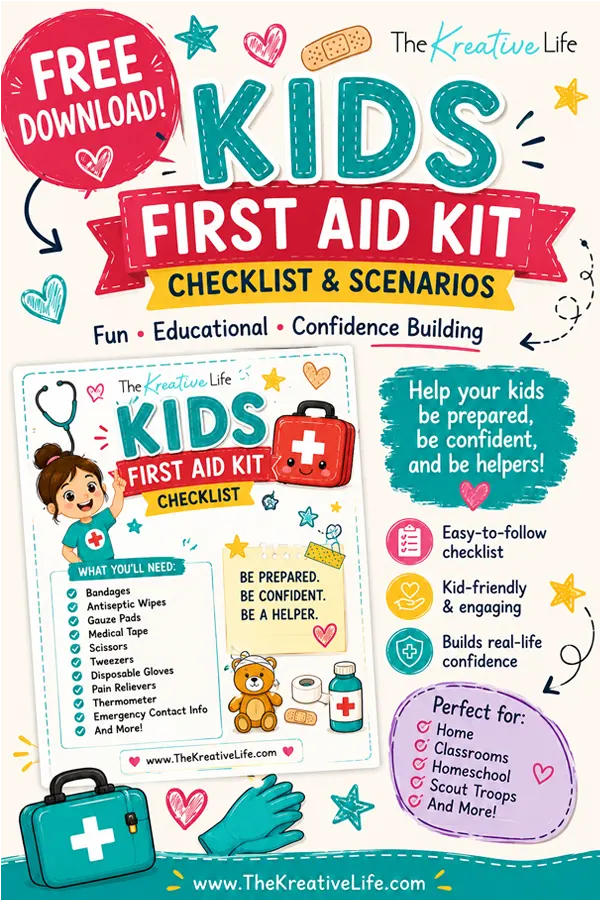
Every kids first aid kit should include adhesive bandages in different sizes, antiseptic wipes, gauze pads, medical tape, tweezers, scissors, disposable gloves, cotton swabs, and a thermometer.
Families should also keep emergency contact information and any necessary medications inside the kit.
As you add each item, explain its purpose. Show your child how tweezers can remove a splinter or how gauze can help protect a larger cut. Encourage them to ask questions and become familiar with where everything is stored.
Keeping a first aid kit in both your home and your car can help children understand the importance of being prepared wherever they go.
First Aid Scenarios for Kids to Practice
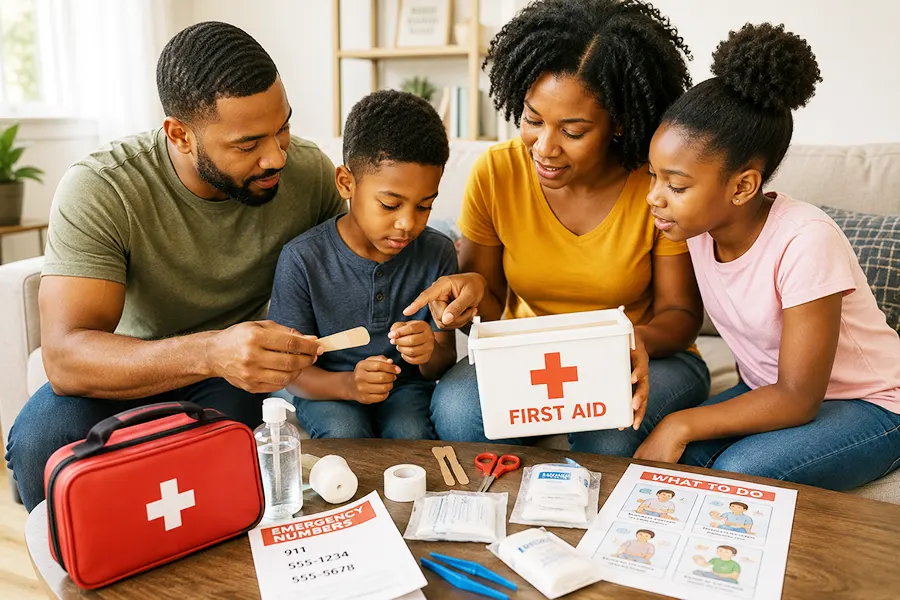
One of the best ways to teach a child first aid is through practice. Children often remember experiences much better than lectures, which is why first aid scenarios for kids can be so effective.
Imagine that your child is playing outside when a friend trips and scrapes their knee. Ask them what they would do first.
Would they clean the cut? Find a bandage? Get an adult? Walking through these situations together helps children think critically.
You can also practice other common scenarios. Pretend that a younger sibling has a splinter after playing in the backyard. Ask your child how they would respond if someone suddenly had a nosebleed during a playdate.
Discuss what they would do if they accidentally touched a hot pan or if someone twisted an ankle on the playground.
These role playing activities turn first aid into something interactive instead of something children simply read about.
Our free printable includes ten first aid scenarios for kids that families can practice together at home.
Fun Ways to Teach First Aid to Children
Children learn best when they are actively involved. Fortunately, first aid lessons can be both educational and fun.
Turn stuffed animals into patients and ask your child to treat their injuries. Create a scavenger hunt where children search for items that belong in a first aid kit.
You can even challenge them to identify supplies at the store and explain what each item does.
Printable worksheets and scenario cards are another great option because they encourage children to think through emergencies in a safe environment.
Many families discover that children become much more interested when learning feels like a game rather than a lesson.
Small, frequent activities often work better than long teaching sessions. Spending just a few minutes discussing safety each week can have a lasting impact.
First Aid Safety Tips for Kids
As children learn first aid skills, it is important to remind them that their own safety comes first. Kids should understand that helping someone never means putting themselves in danger.
Teach children to find an adult immediately if someone is seriously injured or having trouble breathing. Explain that they should never give medicine to another person without permission from a parent or guardian.
Remind them to wear gloves when helping someone with a cut or scrape and to wash their hands afterward.
Children should also know that they are not expected to solve every problem on their own. Sometimes the bravest thing they can do is ask for help.
By emphasizing these first aid safety tips for kids, parents can help children develop confidence while still understanding their limits.
How to Prepare Children for Emergencies
First aid is only one part of emergency preparedness. Children should also know important phone numbers, recognize trusted neighbors, and understand where emergency supplies are kept.
Consider creating a family safety plan together. Walk through your home and show your child where flashlights, batteries, and first aid kits are stored.
Practice different situations, such as severe weather or power outages, so that children know what to expect.
These conversations do not have to be scary. Presenting emergency preparedness as an important life skill can help children feel more secure rather than anxious.
Download Our Free Kids First Aid Checklist and Scenarios
Teaching a child first aid does not happen in a single afternoon. It is a process that develops over time through conversations, practice, and real life experiences.
To help your family get started, download our free Kids First Aid Checklist and Scenarios printable.
It includes a list of first aid supplies, emergency contacts, and interactive situations that children can practice with a parent or trusted adult.
Learning how to teach a child first aid is one of the most valuable gifts parents can give.
By helping children stay calm, think clearly, and know when to ask for help, families can build confidence that lasts far beyond childhood.
Click here to download your Kids First Aid Printable!